
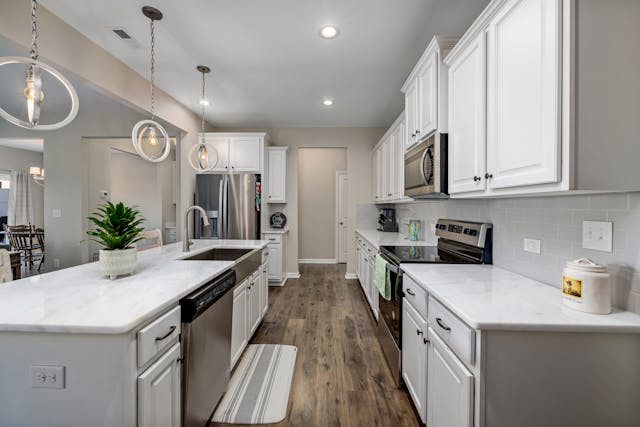
Selecting a kitchen countertop is one of the more important decisions in any home upgrade or build. It is a surface that sees daily use, from meal preparation to casual gatherings, and it must balance durability, maintenance, and visual appeal. With so many materials available, the right choice often comes down to understanding how each option performs under real-world conditions.
Start with How the Space Is Used
Before focusing on colors or finishes, consider how the kitchen functions day to day. A frequently used kitchen with heavy cooking demands a surface that can withstand heat, scratches, and spills. In contrast, a lightly used space may allow for more delicate materials that prioritize appearance over resilience.
Understanding Common Materials
Each countertop material brings its own strengths and limitations:
- Quartz: Engineered for consistency and durability, quartz is non-porous and resistant to stains. It requires minimal maintenance and performs well in busy kitchens. However, it is less tolerant of direct heat than some natural stones.
- Granite: A natural stone, granite is known for its strength and beautifully unique patterns. Granite handles heat well and adds long-term value, though it typically requires periodic sealing to maintain resistance to moisture and stains.
- Marble: Often chosen for its timeless appearance, marble is softer and more porous. It can scratch and stain more easily, making it better suited for lower-impact areas or homeowners comfortable with visible wear over time.
- Laminate: A budget-friendly option, laminate has improved significantly in design. While it is resistant to stains, it can be vulnerable to heat damage and surface wear.
- Butcher Block: A warm, natural option that works well in certain kitchen styles. It requires regular maintenance, including oiling, and is more susceptible to scratches and moisture damage if not properly cared for.
Durability vs. Maintenance
Durability is not just about hardness. It also includes how well a surface resists staining, chipping, and long-term wear. Equally important is maintenance. Some materials demand regular sealing or conditioning, while others are largely maintenance-free. A practical selection balances both factors to match the homeowner’s tolerance for upkeep.
Consider Installation and Structure
Countertops are heavy, and not all cabinetry is designed to support every material. Natural stone, for example, may require reinforced base cabinets. Professional installation is often necessary to ensure proper support, alignment, and sealing—factors that directly affect longevity.
Budget with Long-Term Value in Mind
Initial cost is only part of the equation. A lower-cost material that requires frequent replacement or repair may be more expensive over time than a higher-quality option installed once and maintained properly. Factoring in lifespan and upkeep costs leads to a more informed decision.
Final Thoughts
A well-chosen countertop supports both function and design without creating ongoing maintenance concerns. By focusing on how the kitchen is used, understanding material performance, and considering long-term value, it becomes easier to select a surface that will hold up well over time and continue to meet everyday needs.