
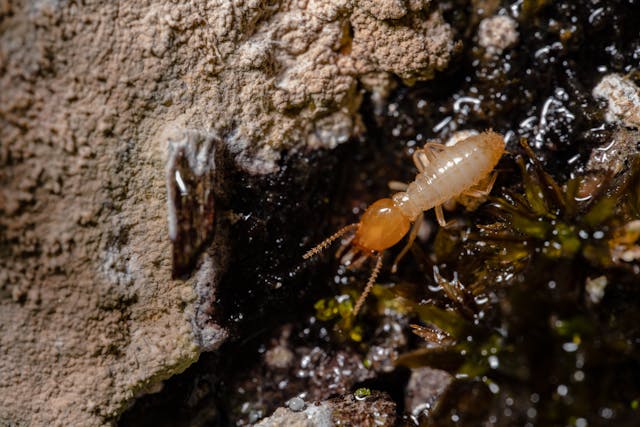
Termites are quiet, persistent, and remarkably good at staying out of sight. By the time visible damage appears, they may have been feeding for months—or even years. The good news is that homes often give subtle clues long before structural repairs become necessary. Knowing where to look can help catch an issue early and prevent costly surprises.
The Foundation: Ground Zero for Termite Activity
The most common place termites gain access is where the home meets the soil. Foundation walls, crawl space piers, and slab edges provide easy entry points, especially when wood siding, trim, or lattice sits too close to the ground.
Look for narrow, pencil-sized mud tubes climbing foundation walls or extending across masonry. These tunnels protect termites as they travel between the soil and the wood they are consuming.
Tip: Any wood or mulch piled against the foundation should be moved away to reduce moisture and eliminate hidden access points.
Crawl Spaces and Basements: Hidden but High-Risk Areas
Crawl spaces are particularly vulnerable because they tend to be dark, damp, and rarely inspected. Floor joists, sill plates, and support beams are all prime feeding targets when moisture levels remain elevated.
Signs to watch for include:
- Mud tubes on piers or foundation walls
- Soft or blistered wood
- Areas that sound hollow when tapped
- Excess humidity or standing water
Basements can present similar conditions, especially near plumbing penetrations or unfinished framing.
Porches, Decks, and Steps
Any exterior structure connected to the home can act as a bridge for termites. Wooden deck posts, porch columns, stair stringers, and railings are often exposed to both soil and moisture.
Pay special attention to areas where wood appears weathered, cracked, or in direct contact with the ground. Probe suspicious spots gently with a screwdriver. Damaged wood may feel thin or break apart easily.
Window and Door Frames
Termites do not limit themselves to structural framing. They may also invade window sills, door casings, and baseboards, particularly when moisture from leaks softens the wood.
Common warning signs include:
- Bubbling paint
- Tight-fitting doors or windows
- Small cracks along trim
- Hollow-sounding wood
These symptoms are often mistaken for normal settling or humidity changes.
Garages and Utility Areas
Expansion joints in garage slabs, water heater closets, and areas around plumbing lines can provide concealed entry routes. Cardboard boxes and stored lumber may also attract attention if termite activity is nearby.
A Few Minutes of Checking Can Save Thousands
A careful visual inspection around the foundation, beneath the home, and along exterior wood components can reveal early evidence of termite activity. Mud tubes, moisture problems, and wood-to-soil contact are among the most important red flags.
Termites work slowly but relentlessly. Catching them early is one of the simplest ways to protect a home’s structure and avoid repairs that are far more expensive than the inspection that could have uncovered the problem.